From daily notes to stakeholder reports
A senior engineer once told me that good communication is a multiplier on every other professional skill. I didn’t believe her at first. I thought communication was the soft layer on top of the real work — the part that mattered when the work was done.
She was right. I was wrong.
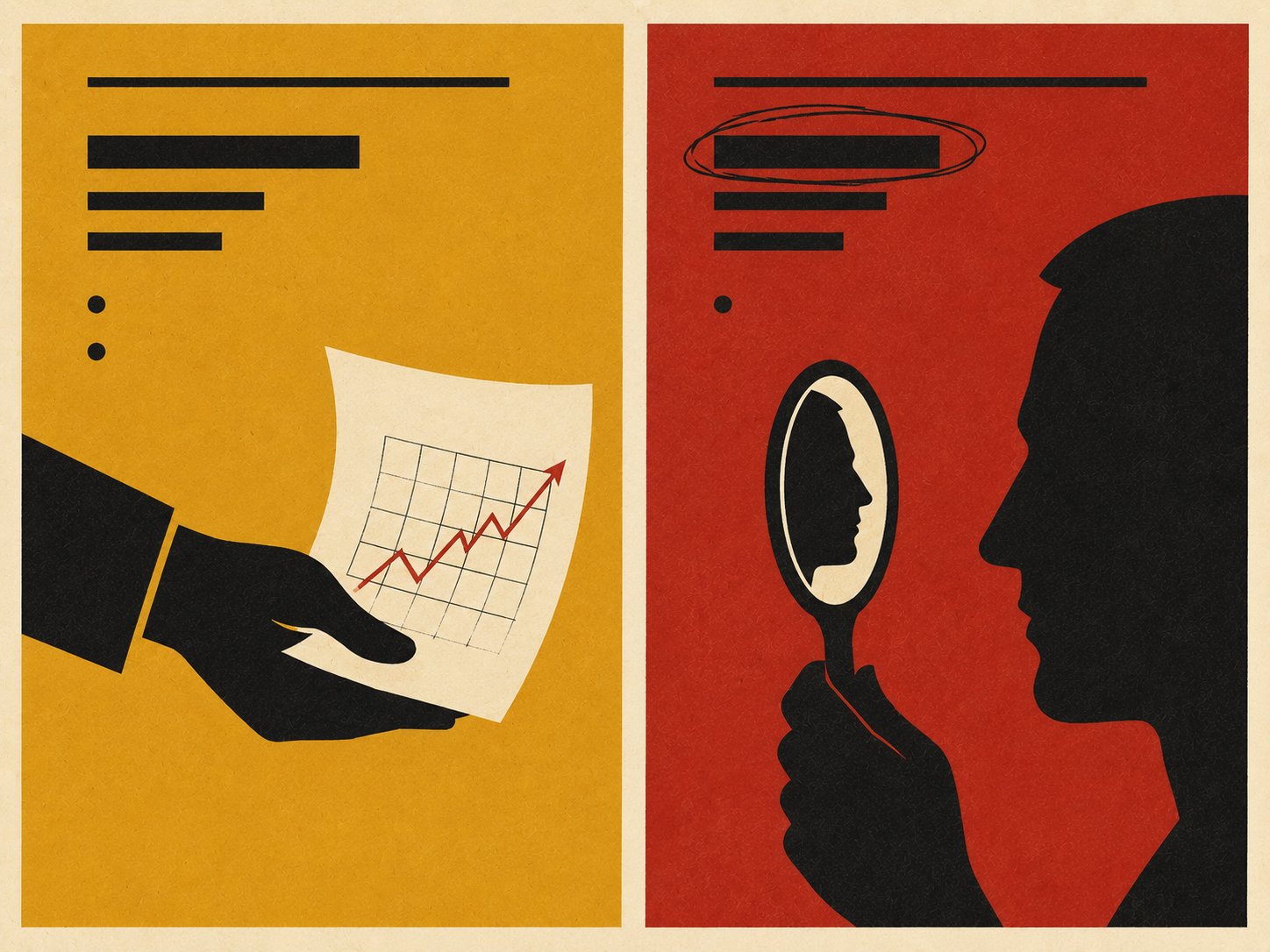
A few jobs in, I noticed the engineers I most respected weren’t necessarily the strongest coders, and they were all unusually good at telling different audiences different things in ways those audiences could act on. They didn’t write the same status update for everyone. They wrote a manager update for their manager, a team update for their team, a self-review for themselves, and — when the work needed it — something specifically for QA or the client. Same week. Different audiences. Different lenses.
This post is about that practice and the small, deliberate way I now run it. The journal you keep daily becomes the input. The output is multiple reports, each shaped for one audience.

Four audiences, four different things they need
The manager
What the manager needs from you is mostly a small set of things, repeated reliably:
- Outcomes, expressed in business or product language, not implementation language.
- Risks, surfaced early and clearly. The manager would rather hear about a problem two weeks before it lands than the day it lands.
- Asks, if any. “I need this decision from you”, “I’d like to bring in this person.”
- Confidence calibration. “On track” vs. “at risk” vs. “blocked”, applied honestly.
The manager doesn’t usually want — and often actively doesn’t want — implementation details, technical justifications, or a recap of every meeting. The bar for inclusion is would my manager regret me leaving this out, given what they need to do this week?
The team
What the team needs is closer to the work itself, but it’s also not a transcript:
- What’s in flight, so the team can avoid duplicate work and spot integration points.
- Where you’re stuck or ambiguous, so they can help.
- What’s about to land, so they can prepare for review or downstream work.
- What you noticed, so the team’s collective knowledge grows.
The team is the audience that benefits most from candor about the messy middle. “Spent two days chasing the wrong cause of the auth bug; turned out to be X.” That sentence is more valuable to the team than a polished postmortem, because it tells them the same trap is there next time.
Yourself
What you need from your own writing is the most personal of the four:
- Patterns, surfaced from a longer view than a single day.
- Friction, identified and named so it doesn’t stay invisible.
- Decisions you made and the reasoning at the time, so future-you can recover not just what but why.
- Honest evaluations of your own week — what you did well, what you’d do differently.
The self-audience is the one most prone to skipping. It feels self-indulgent. It isn’t. It’s how you compound, and skipping it is why some engineers learn fast and some plateau.
The reviewer (when applicable)
When work is going to be checked by someone else — QA, a security reviewer, a customer — the reviewer wants:
- What changed and why, including the corner cases you considered.
- What you tested, and what you couldn’t or didn’t.
- Known gaps. “This works for cases A and B; C is not yet handled.”
- Reproduction instructions, written for someone who doesn’t have your context.
The reviewer audience is the most demanding for clarity, because the consequence of unclear writing is rework or worse.
Why one source, four lenses, beats four separate trackers
I used to think the right answer was four parallel notebooks — one for each audience. Day one, write four entries; day two, write four more. By the end of the week, four threads of writing.
That collapsed within a month. The cost of writing four parallel entries is too high; one of them always gets dropped, which means that audience starts getting nothing, which means the entire system feels broken.
The thing that worked, after a few iterations, is one source, four lenses.
The source is the daily journal — captured the same way every day, in the same place, regardless of audience. The lenses are derived from the source on demand, weekly or whenever an audience asks. The lenses are different views of the same week.
Same source. Different selection, ordering, and emphasis.
This works because the information is invariant — what I did this week is what I did this week. What changes by audience is which subset matters and how it’s framed. Selection and framing are what you should be doing for each audience anyway. Doing them on demand from a single source is the cheap version of the same work.
What I do not delegate
The lens application — translating from journal entries to audience-shaped output — can be largely delegated to an AI assistant. The framing rules are stable; the input is text; the transformation is reasonably mechanical.
What I do not delegate is the editorial pass after the lens is applied.
A manager report drafted by the assistant is competent. It will sometimes pick the wrong outcome to lead with. It will sometimes hedge a problem too softly because it’s been trained on corporate-polite phrasing. It will sometimes call something “on track” when I know it isn’t.
The five-minute editorial pass — I read what the assistant produced and rewrite the parts that aren’t quite right — is the part that has to be mine. Not because the assistant can’t get close; it can. Because the closeness matters. A manager report that’s 90% right and 10% slightly wrong about the wrong things is worse than a report that’s 80% as polished but accurate everywhere.
This is the same point I made in the previous post: the assistant lowers the friction; the judgment stays mine.
A small note on tone
One thing about communicating to multiple audiences that I underestimated for a long time: the tone of each report is part of the message.
A manager report in casual chat-speak signals “this isn’t important enough to think about carefully.” A reviewer report in vague prose signals “I haven’t done my homework.”
The vocabulary and the tone are doing work the bullet points alone can’t do. When I review my own drafts, that tone check is the last thing I run before sending. Does this feel right for who’s reading it? If not, what specifically reads off?
What this looks like in practice
A typical Friday for me, end of day, runs roughly like this.
- Open the week’s journal entries (five files, one per workday).
- Ask the AI assistant to produce four drafts: manager update, team update, self-summary, and any pending reviewer notes.
- For each draft, do a five-minute editorial pass. Cut what doesn’t earn its place. Reframe anything that hedges where I want to be direct, or directs where I want to hedge.
- Post each report to the appropriate channel: manager update to a private DM thread, team update to the team channel, self-summary stays in my own folder, reviewer notes attached to whatever artifact they go with.
Total time: thirty to forty minutes for the whole week. Without the source-and-lens model, the same set of reports used to take me two-plus hours and frequently got skipped.
The thirty-minute version isn’t lower quality. In some ways it’s higher, because the framing rules don’t drift across reports and each audience knows what to look for.
That’s the whole pitch. Communicate often, communicate differently to different audiences, and let the source be one and the lenses be many.